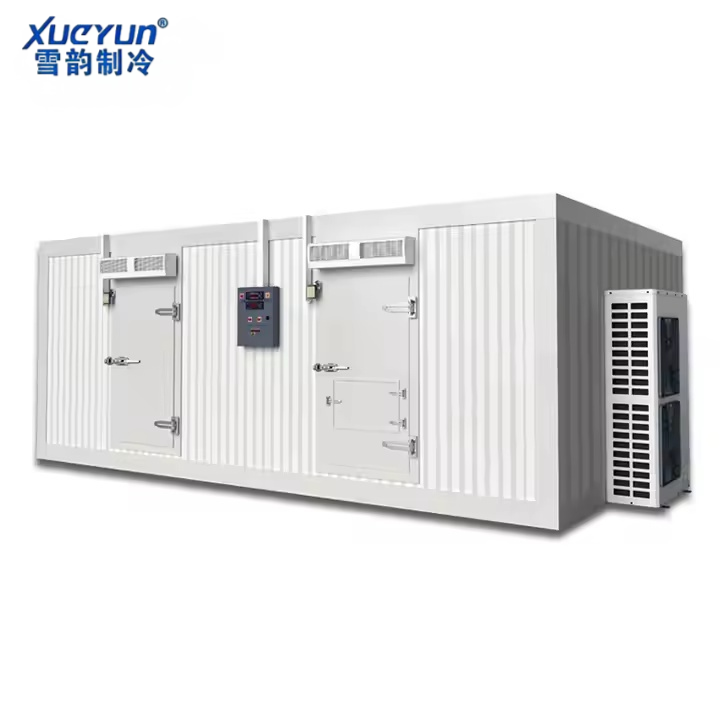
Large-scale Cold Storage Rooms and Freezer Rooms
View More
Understanding the correct meat cold room procedures whether frozen or chilled, is important if you want produce that is as fresh, delicious and safe as possible.
Harmful bacteria begin to develop in raw meat from the moment an animal is slaughtered, making storage an incredibly time sensitive process. If you want or need to prolong the life of your meat for as long as possible, it’s crucial that you follow the correct safe storage procedures.
Usually the temperature dropped below -18 ℃, the food freezing rate was high, the microorganisms and enzymes basically stopped moving and growing, and the oxidation was also very slow. Therefore, the food can be stored for a longer period of time and has better frozen quality. In addition, frozen food also requires that the temperature in the storehouse be relatively stable. Excessive temperature fluctuations will cause spoilage of the food.
If meat and other related products are not stored or preserved within the right temperature, the quality and flavor of the products will diminish or get contaminated. The only way to avoid such circumstances is to preserve your meat products in professional cold rooms at a suitable temperature. The best temperatures to store meat are around +10°C and -1°C.
The freezing point of meat juice is -0.6 ~ -1.2 ℃. When the carcass temperature after slaughtering is about 35 ℃, it is sent to a pre-cooling room. The designed room temperature is about 0 ~ -2 ℃. The meat temperature is reduced to 4 ℃ in the cold room. Due to the small heat capacity and thermal conductivity of the air, increasing the air flow rate can increase the cooling rate. However, an excessively strong air flow rate cannot increase the cooling rate compared with the same period of the previous year, but it will greatly increase the dry shrinkage loss and power consumption of the meat surface. Therefore, in the cooling process, the wind speed in the cargo room of the cold room is suitable not to exceed 2m / s, and generally the above 0.5m / s is used. The air circulation times are 50 ~ 60 times / h, and the cooling time is 10 ~ 20h. The average dry body consumption is about 1.3%.
B. The cold room temperature is about -1 ℃, the air velocity is 0.5 ~ 1.5m / s, and the cooling time is 10 ~ 15h, so that the surface temperature gradually increases and the internal temperature gradually decreases, so that the temperature of the body is balanced until the thermal center temperature reaches 4 ℃. The meat cooled by this method has good color, aroma, taste and tenderness, which shortens the cooling time and reduces the dry consumption by 40% to 50%. The following picture shows the process conditions for rapid meat cooling.
These timings are a good indication of how long regular cuts of meat will stay fresh at -18°C if storage procedures, up until this point, have been followed correctly.
Beef and lamb generally have a longer storage time because they are made up of hard fats, which are partially saturated. However younger meats, such as veal and pork, will deteriorate much faster as they have a lower level of saturated fat. Larger cuts of meat will almost always have a smaller storage time, as they take longer to blast freeze initially.
Alongside this, you should be careful never to overfill your cold storage warehouse as this can cause meat to freeze slowly or unevenly, leaving your customers susceptible to food borne illness.